Dev.IQ · 02

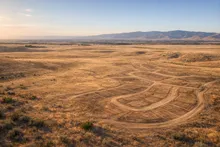
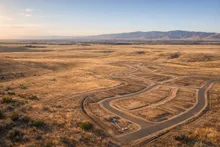
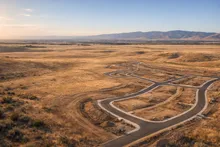
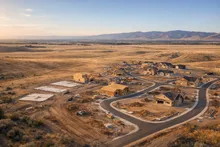
Ten phases. One continuous process.

Land developers come to us at every phase. From the moment we look at a parcel to the day the final plat is recorded, every Bailey project moves through the same ten phases — knowing what's coming is half the work.

01
Stage 1 — Raw Land
Stage 1 — Raw Land

Site Identification & Feasibility

Market demand, site identification, zoning and FLUM review, utility availability, access and constraints, preliminary yield, and the go/no-go decision.

  • Market demand analysis
  • Site identification
  • Zoning & FLUM review
  • Utility availability
  • Access & traffic constraints
  • Environmental & physical constraints
  • Preliminary yield and pro forma
  • Go / No-Go feasibility decision
02
Stage 1 — Raw Land
Stage 1 — Raw Land

Land Control

Developer-side phase — Bailey does not participate. PSA or option agreement, due diligence, title and easement review, refined concept and costs, exit strategy.

  • Purchase and Sale Agreement (PSA) or Option
  • Due diligence period
  • Title review and easements
  • Refine concept and costs
  • Exit strategy confirmation
03
Stage 2 — Planning / Concept Emergence

Planning / Entitlements

Concept drawing approved by client, road naming, topo and survey, pre-application with city, neighborhood meeting, geotech. Bailey uses this to give agencies an idea of what's being planned. Outcomes: written staff feedback that shapes the preliminary plat.

  • Concept plan (client approval)
  • Road naming
  • Topo / Survey
  • Pre-application meeting with city
  • Neighborhood meeting
  • Geotech
  • Written agency feedback
04
Stage 2 — Planning / Concept Emergence

Preliminary Plat (PP)

A more detailed plan presented to city staff. Bailey works with staff, agencies, and the political climate to find a path that meets code and the future land use map (FLUM). Outcomes: staff report, PZ recommendation, council decision (approval, denial, or continuance), and a development agreement when required.

  • Preliminary plat production
  • Materials & exhibits
  • Applications
  • Staff report
  • PZ Commission recommendation
  • City Council decision
  • Development agreement (if required)
05
Stage 3 — Design / Engineering Layer

CDS — Construction Document Set

Engineering design. Bailey produces the civil line work and product fit exhibit, and coordinates the landscape architect (planting plan per code) and surveyor (final plat layout) into one document set. Iterative client redlines.

  • Civil line work (grading, utilities, stormwater, streets)
  • Product fit exhibit
  • Landscape plan (landscape architect, coordinated by Bailey)
  • Final plat layout (surveyor, coordinated by Bailey)
  • Client redline rounds
  • Agency review iterations
06
Stage 3 — Design / Engineering Layer

Submittal & Approvals (SAs)

Bailey shepherds the submittal package through agency review. Other documents the CDs depend on — legal descriptions and easements from the surveyor, landscape plan from the landscape architect — are coordinated by Bailey into one coherent submittal. Comment-response cycles average three to four rounds. Outcome: CDs stamped and approved.

  • CDs submittal to agencies (irrigation, street, city, fire, health)
  • Permit applications (ITD, 404, etc. if needed)
  • Legal descriptions and easements (from surveyor)
  • Final plat (from surveyor)
  • Comment-and-response rounds (3–4 average)
  • Stamped and approved plans
  • License agreements
  • Permit issuance
07
Stage 4 — Permit / Build-Ready Site

Construction (CON)

Horizontal build — roads, utilities, grading above and below ground. Bailey is not the contractor; Bailey's role is construction observation and agency coordination. Agency inspections and punch list throughout.

  • Construction observation reports (Bailey)
  • Agency inspection coordination (Bailey)
  • Punch list management (Bailey)
  • — On the parcel (contractor): —
  • Clearing, grading, and earthwork
  • Utility installation
  • Road and infrastructure construction
08
Stage 4 — Permit / Build-Ready Site

As-Builts / Record Drawings

The surveyor measures what was actually built. Bailey converts those measurements into record drawings, which agencies review for conformity with the approved CDs. The developer may need to remediate punch list items before approval.

  • Surveyor field measurements
  • Bailey produces record drawings
  • Drainage and PI certification
  • Agency conformity review
  • Agency inspection / punch list
  • Approved record drawings
09
Stage 4 — Permit / Build-Ready Site

Final Plat Routing & Recording

Engineering report, final plat applications, mylar routing through multiple agencies, owner signature, county recording, addressing. Outcome: multi-agency approval results in county recording.

  • Engineering report
  • Final plat applications
  • Mylars from surveyor
  • Owner signature
  • Health Department (~2 weeks)
  • Highway district (~3 weeks)
  • County Surveyor (~2 weeks)
  • City (3–4 days)
  • County Plat Review (1–3 days)
  • County Treasurer (1 day)
  • Recorder (1 day)
  • Addressing (3 days)
  • Agency inspection / punch list (final round)
10
Stage 6 — Closeout / Completed Neighborhood

Vertical Development / Sale

Bailey's engagement ends after Phase 9. The builder or developer handles vertical construction, sales or lease-up, and HOA or asset-management transition.

  • Vertical construction (homes or commercial buildings)
  • Sales or lease-up
  • HOA or asset management transition
Have a project?

We start every engagement at Phase 1.

Most projects come to us mid-process. That's fine — but a feasibility study saves more money than every other phase combined.

Start with feasibility →
Feedback