
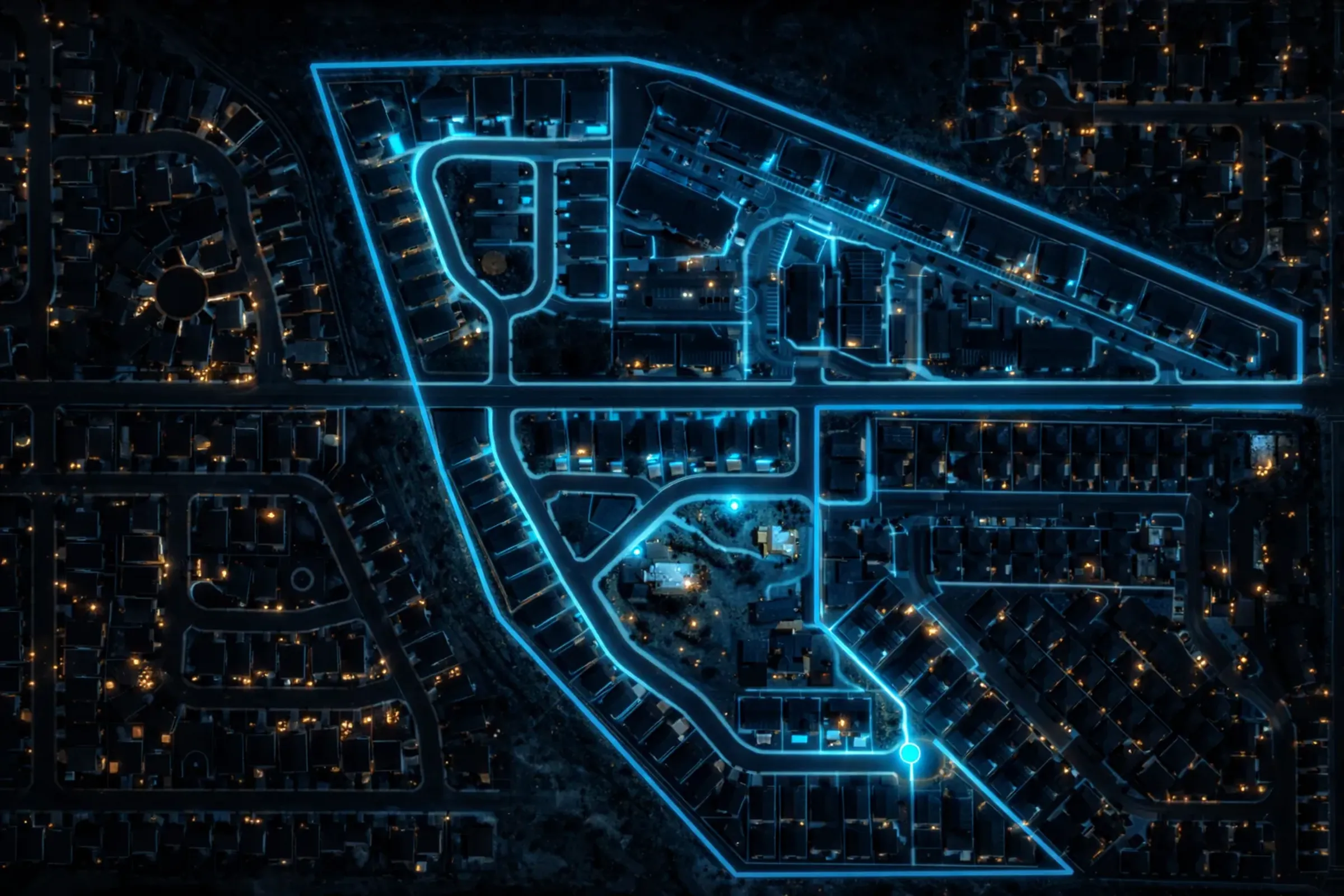
Foxcroft
Overview
Foxcroft is a 35.72-acre mixed residential development in Meridian, Idaho, combining 75 single-family homes with a 216-unit apartment community. The project required Bailey to design infrastructure that efficiently serves two distinct residential densities on a single site.
Bailey led civil engineering and land planning from feasibility through construction closeout. The core engineering challenge was designing shared trunk infrastructure — water mains, sewer lines, and stormwater systems — that appropriately served both the low-density single-family section and the higher-density apartment section without over-sizing for one or under-serving the other.
The stormwater design was a particular win: by engineering a unified drainage system instead of separate ponds for each housing type, Bailey reduced total stormwater footprint and recovered usable acreage.
Bailey's research into Meridian's mixed residential approval history showed that projects combining single-family and multifamily on one site had a higher approval rate when the multifamily component was positioned along the arterial frontage — a pattern reflected in the Foxcroft layout.
Scope
- Mixed residential feasibility and yield analysis
- Preliminary layout for single-family and multifamily sections
- Entitlement coordination with City of Meridian
- Unified grading, drainage, and stormwater design
- Water and sewer infrastructure sized for mixed density
- Roadway and access design with ACHD coordination
- Multifamily parking and site circulation design
- Construction observation and closeout
Challenge
Designing shared infrastructure for two fundamentally different housing types on one site — single-family homes and apartment buildings — required careful coordination of utility sizing, stormwater capacity, and access points. The multifamily portion demanded higher-density utility design while the single-family section needed standard residential infrastructure, all feeding into common trunk lines.
Outcome
The project delivered on schedule with unified infrastructure that serves both housing types without over-building capacity. The shared stormwater system reduced overall pond acreage compared to separate systems, recapturing developable land for the developer.