
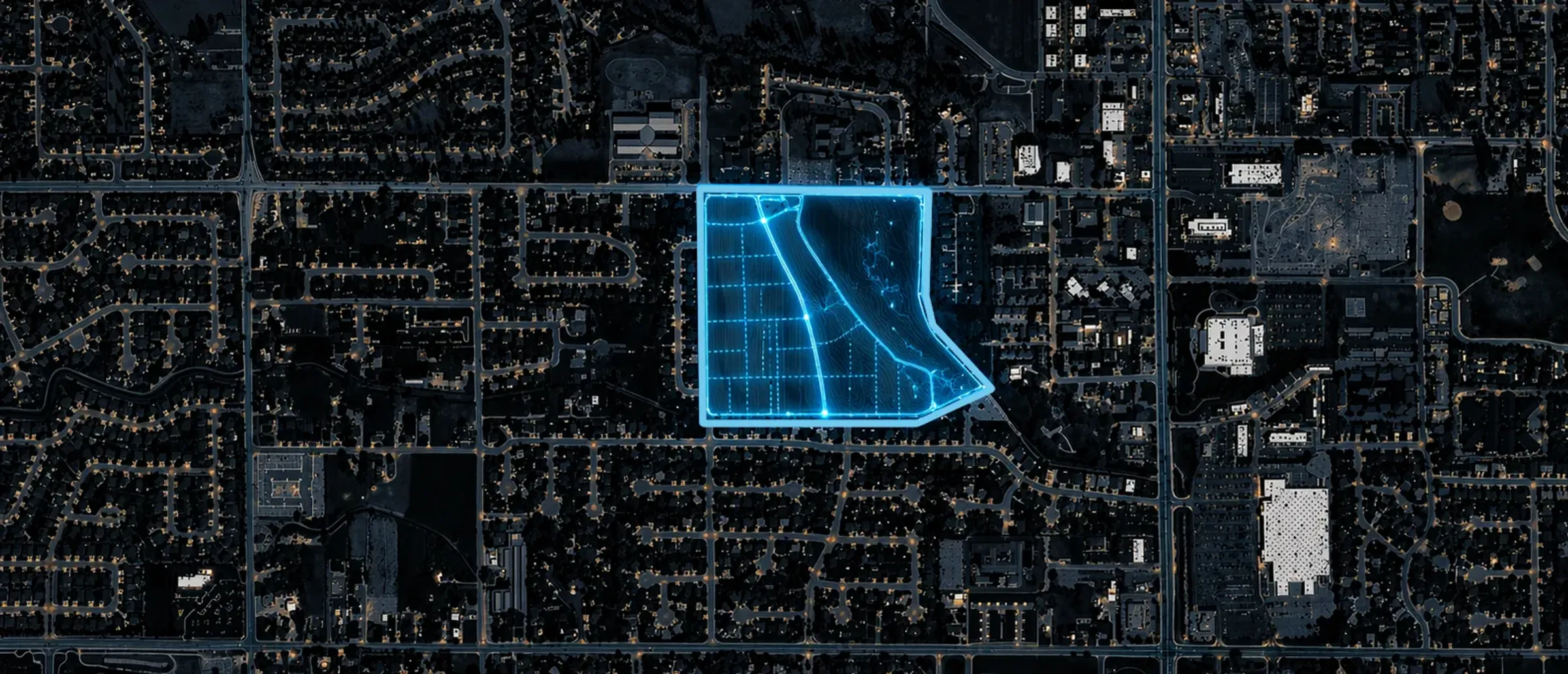
Swainson's Hawk Arbor
Overview
Swainson’s Hawk Arbor is a 146-lot single-family residential subdivision on 39.92 acres in Nampa, Idaho. The project required navigating habitat-adjacent design constraints while maximizing developable lot yield for the developer.
Bailey Engineering led the project from initial site feasibility through construction, providing civil engineering, land planning, and entitlement coordination. The site’s proximity to identified Swainson’s Hawk nesting areas introduced buffer and open space requirements that shaped the entire layout strategy.
The project demonstrates Bailey’s approach to constraint-driven design: rather than treating environmental limitations as obstacles, the team used early feasibility analysis to turn the required habitat buffer into a connected open space system that became a marketable neighborhood feature.
Bailey's land use intelligence database showed that Nampa's Planning and Zoning Commission had approved 91% of residential subdivisions under 50 acres in the surrounding corridor over the previous 3 years, which informed the entitlement strategy and timeline projections for the developer.
Scope
- Site feasibility and yield analysis with habitat constraint modeling
- Preliminary layout and lot optimization
- Annexation and rezone coordination with City of Nampa
- Grading, drainage, and stormwater management design
- Water and sewer infrastructure design
- Roadway design and ACHD coordination
- Open space and habitat buffer planning
- Construction observation
Challenge
The site sits adjacent to identified Swainson's Hawk nesting habitat, which introduced buffer requirements and open space constraints that directly reduced developable acreage. Balancing lot yield with habitat mitigation required careful layout iteration and early coordination with Idaho Department of Fish and Game.
Outcome
Bailey's feasibility study identified the habitat constraint at intake and modeled three layout scenarios before the developer committed to land control. The approved layout delivers 146 lots while preserving a contiguous open space corridor that satisfies habitat buffer requirements and doubles as a neighborhood amenity.